
Motivation
It seems as if there is always something new to keep track of: what am I reading; what am I watching; when was my last workout? This need to simply keep track of habits led me to develop Logger’s World.
It’s called Logger’s World because, powered by NoSQL, the user can store any kind of habit, with whatever shape, as a log. In this minimalist application, a user can create a custom Log Type, and add entries for it.
Demo
Live demo: loggersworld.literaturelounge.org
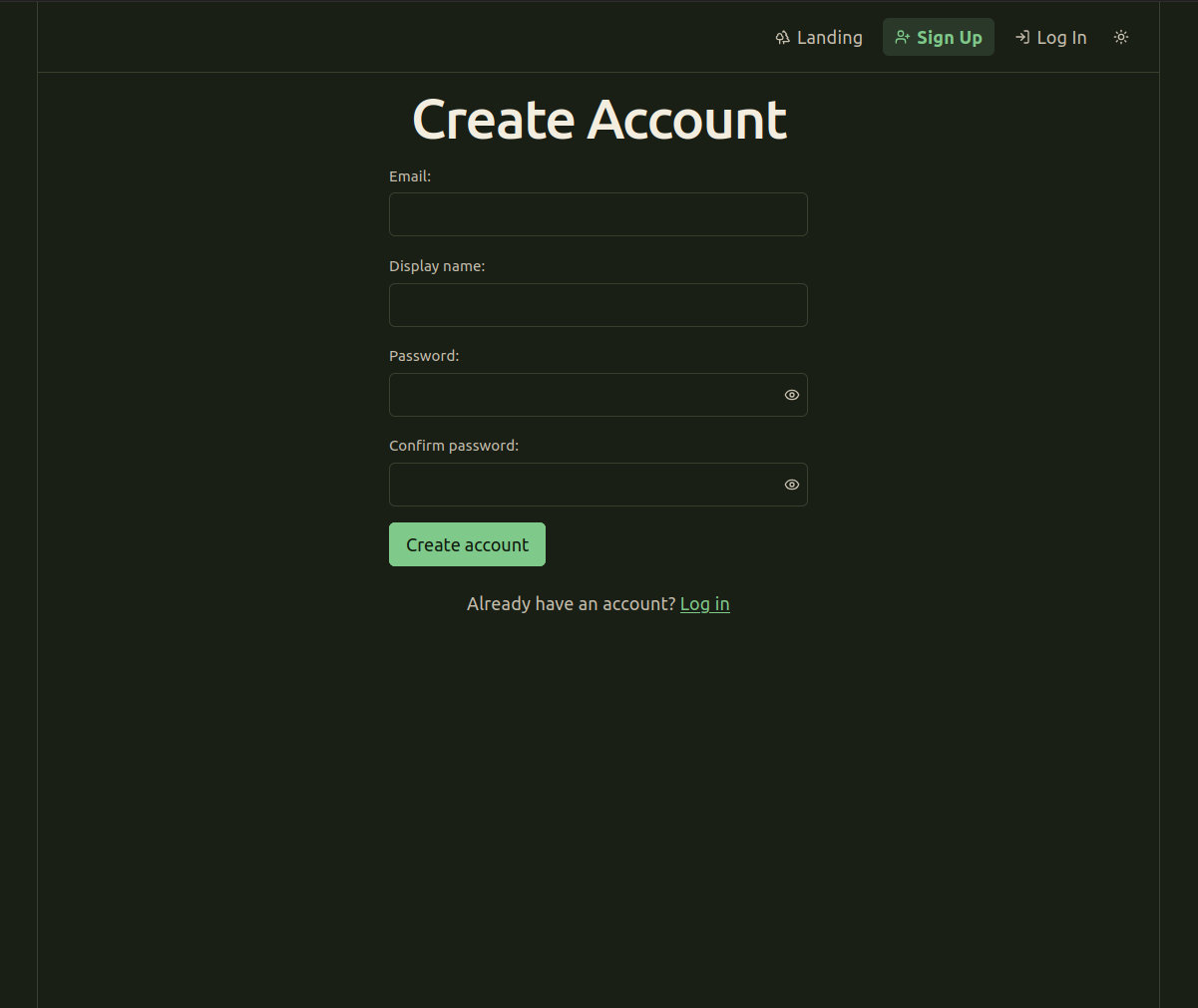
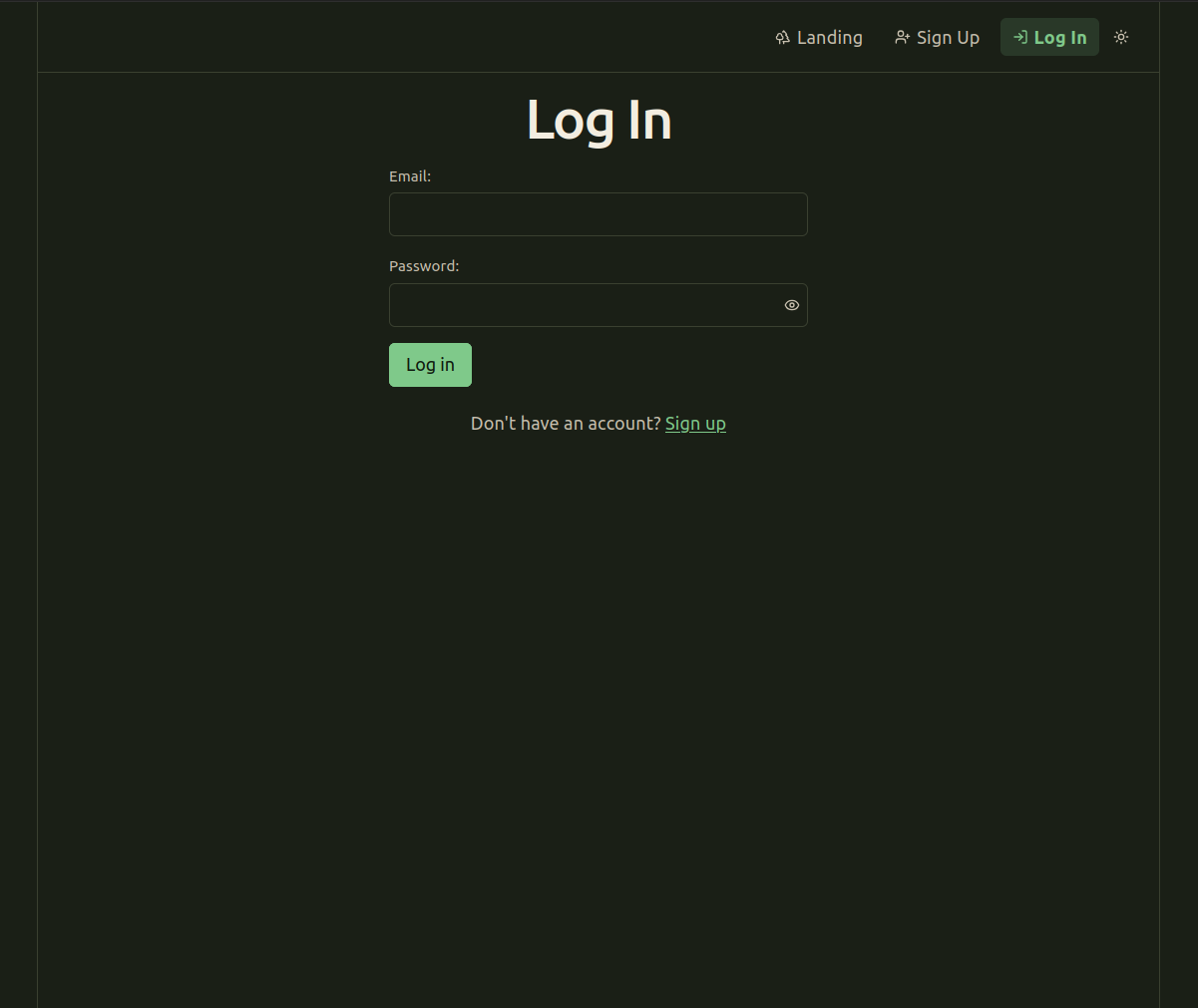
A full walkthrough of the core flow — creating a log type, adding an entry, editing it — is recorded in loggersworld-demo.webm.
Tech Stack
| Layer | Technology | Free tier |
|---|---|---|
| Frontend framework | React (Vite) | Free (open source) |
| Frontend hosting | AWS Amplify Hosting | Always-free tier |
| Backend runtime | Node.js + Express | Free (open source) |
| Compute | AWS Lambda (via Function URLs) | Always free — 1M requests/month |
| Database | Amazon DynamoDB | Always free — 25GB storage, 25 RCU/WCU |
| Auth | Amazon Cognito | Always free — up to 50,000 MAUs |
| Infrastructure as Code | AWS CDK (TypeScript) | Free tool — pay only for what it provisions |
| CI/CD | GitHub Actions | Free (public repo) |
Every piece was chosen to stay inside AWS’s always-free tier while still reflecting a production-shaped architecture:
- DynamoDB, single-table design over one-table-per-entity, because both
LogTypeandLogEntryshare the same owner-scoped access pattern (USER#<ownerId>partition key), so a single query satisfies “get everything for this user” without a secondary index. - Cognito over hand-rolled auth, so password storage, hashing, and JWT issuance never had to be built or audited from scratch — the Express backend only ever verifies a token it didn’t issue.
- Lambda + Function URL over API Gateway, since a single Express app behind
serverless-httpneeded no routing, throttling, or transformation layer beyond what Express already does. - CDK (TypeScript) over hand-written CloudFormation was chosen for loops/types/reuse when defining near-identical resources (e.g. table/pool ARNs threaded into IAM grants) instead of repeating YAML blocks.
Technical Challenges
Cognito’s alias vs. username attribute — a silent data-integrity trap. The user pool originally used signInAliases: { email: true, username: true }, treating email as an alias pointer to a separate username. AWS only enforces alias uniqueness among confirmed users, so testing surfaced two problems: multiple UNCONFIRMED accounts could register the same email with no warning, and when a second account confirmed with an already-claimed email, Cognito silently reassigned the alias — flipping the first account’s email_verified back to false with no notice to either party.
The fix? Switching to signInAliases: { email: true } alone, making email the pool’s actual username (enforced unique immediately at sign-up, confirmed via a duplicate signUp() failing instantly with UsernameExistsException).
The catch… UsernameAttributes is an immutable CloudFormation property, so cdk deploy refuses to update it in place. Since the pool had zero real users at the time, renaming the CDK construct ID (LoggersWorldUserPool → LoggersWorldUserPoolV2) let CloudFormation treat it as a new resource — replacing the pool in the same deploy. Catching this pre-launch mattered: the same fix against a live pool with real accounts would have deleted every one of them, and would instead require a User Migration Lambda to re-authenticate users into a second pool one login at a time.
CORS as a browser-only failure mode, invisible to every other test. The first real frontend call (POST /log-types) failed with a generic “Failed to fetch,” even though curl and a Node-based token-fetch script worked fine against the same endpoint. The difference: CORS is a browser-only check, and the Lambda Function URL wasn’t configured to allow it.
The fix was simple once found — CDK’s addFunctionUrl() takes a cors option where the allowed origins have to be explicitly listed. Adding the frontend’s origin there fixed it, no Express middleware needed.
Architecture

- Frontend — React (Vite), hosted on AWS Amplify Hosting, auto-built from
main - Auth — Amazon Cognito User Pool; the frontend talks to Cognito directly for sign-up/sign-in and attaches the resulting JWT to every API call
- API — Express app running inside a single AWS Lambda function, exposed via a Function URL (no API Gateway); JWT verification middleware extracts the caller’s identity (
subclaim) and scopes every query to their own data —ownerIdis never accepted from the request itself - Data — Amazon DynamoDB, single-table design:
PK = USER#<ownerId>,SK = TYPE#<typeId>orENTRY#<typeId>#<createdAt>, so both “all my log types” and “all entries for one type, newest-first” are satisfied by the base table alone - Infrastructure — the whole backend (table, user pool, Lambda, IAM) is defined in AWS CDK (TypeScript)
- CI/CD — GitHub Actions lints/tests every push and PR, then runs
cdk deployon merge tomain; Amplify Hosting rebuilds the frontend on the same push
Two independent auth gates sit in front of every request: the Function URL’s authType: NONE (an AWS-level “can this invoke Lambda at all” check — the only alternative, AWS_IAM, isn’t viable for a public browser client) and, only after invocation, the Express JWT middleware that actually authenticates the caller.
Results
- Assembled a serverless AWS system spanning 6 services end-to-end (Amplify, Cognito, Lambda, DynamoDB, CDK, IAM) entirely within AWS’s free tier.
- Designed and shipped a solo, 7-day full-stack serverless application, from requirements through production deployment, following a documented day-by-day SDLC (requirements/design → IaC → backend → frontend → integration → testing/CI → deployment).
- Implemented a GitHub Actions CI/CD pipeline that lints, runs 24 automated tests, and deploys infrastructure changes via CDK on every merge to
main. - Caught and fixed a data-integrity bug (Cognito alias uniqueness) and a security-relevant validation gap (entry field types not checked against their parent
LogTypeschema) before production launch.
Links
- Live demo: loggersworld.literaturelounge.org
- GitHub repo: github.com/vkwakweni/loggers-world
- Docs: API contract · Data models · Infrastructure · Roadmap
Further Development
- Region latency: AWS Amplify has no African region yet, so the frontend routes through Ireland, adding latency; Lambda, Cognito, and DynamoDB are all supported locally, so API and auth calls stay fast — only static hosting is affected.
LogTypeediting/deletion: not in scope for the initial build; once entries can outlive schema changes, existingLogEntryitems won’t retroactively match an editedfieldslist, and deleting a type with live entries needs a cascade/block/soft-delete decision.- Entry filtering and a cross-type timeline view, beyond the current per-log-type chronological list.
- Account management: session expiry, self-service account deletion, and editable profile details (currently read-only).
- A general mobile-viewport pass — no dedicated responsive review has been done yet.